Kids' Chance of Massachusetts gala raises record $100,000
Read More
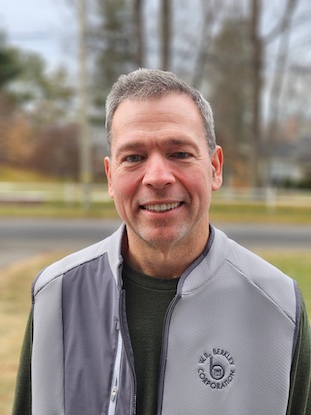
What begins with a small group of committed volunteers can, with vision and heart, become something much larger—a movement that changes lives. Kids’ Chance of America (KCOA) is at that turning point, and few people embody this evolution more clearly than Jim Gilbert, a Kids’ Chance board member whose own journey reflects both the organization’s roots and its future.
Gilbert’s involvement with Kids’ Chance began quietly. Introduced through colleagues at WR Berkeley Corporation who were founding members of Kids’ Chance of Virginia, he initially volunteered at events simply to show support. That changed when he heard scholarship recipients share their stories.
“That was it,” he recalled. “Anybody who has ever gone to a Kids’ Chance event and heard a student speak knows what I’m talking about.”
Hearing how a Kids’ Chance scholarship made continued education possible after a parent’s workplace injury transformed Gilbert from a casual supporter into a committed advocate. One moment in particular crystallized why the mission matters so deeply: At an event, Gilbert met a scholarship recipient who arrived with both parents – including his father, who had been catastrophically injured and was in a wheelchair. The parents insisted on speaking to attendees.
“They didn’t talk about the injury. They didn’t talk anything about themselves,” Gilbert said. “They were just so happy that somebody was willing to help their kid.”
Bridging the gap
For Gilbert, Kids’ Chance fills a critical gap that the workers’ compensation system cannot. In an industry focused on statutory requirements—payments, treatments, compliance—there is little room to address the broader human impact of workplace injuries on families.
“Kids’ Chance gives you an opportunity to take those same people and do something completely different,” he said. “It’s not based on statute. It’s based on kindness.”
Yet kindness alone cannot meet the scale of the need. Gilbert is keenly aware of how many children of injured workers remain unseen and unsupported. Even with eligibility tracking, he believes Kids’ Chance currently reaches only a fraction of those who could benefit.
“It’s a drop in the bucket,” he said. “There are way more kids out there that we haven’t found.”
His message to workers’ compensation professionals is simple and urgent: Help us find them. Pick up the phone. Make the referral. Let families know this support exists. When eligible students are identified, Gilbert is confident the resources will follow.
“If we have a lot of scholarship recipients that are eligible, we will find the money,” he said. “Nobody’s going to let eligible students go without that.”
The Kids’ Chance Way
Looking ahead, Gilbert is already witnessing Kids’ Chance evolve beyond covering tuition alone. Increasingly, students and their families are benefiting from broader support—including help navigating the college application process, identifying additional scholarship opportunities, accessing mental health resources and connecting with other families and students who are facing, or have faced, similar challenges. Much of this expanded support, he noted, is already being piloted at the state level.
He also advocates for greater consistency across state organizations, defining “The Kids’ Chance Way” – so that a student’s eligibility isn’t determined by geography.
This progress reflects a broader transformation. What began as “a small group of really committed individuals doing this in their free time,” Gilbert said, is becoming a unified, professional organization capable of attracting donors, building trust and increasing its nationwide impact.
“We are becoming a much bigger organization,” he said, “so we can really affect and reach out and find all of these individuals that need our help.”
That is the heart of KCOA’s evolution—from a network of volunteers to a movement with structure, scale and soul—driven by compassion and focused on changing lives.